
Borosilicate vs Tempered Glass Storage: The Honest Trade-off Nobody Explains at the Booth
Ask a glass supplier which is better, borosilicate or tempered soda-lime, and you'll get whichever answer matches the shelf behind them. The truthful answer is annoying: they're good at opposite things, and the whole buying decision is knowing which failure your customer will actually meet.
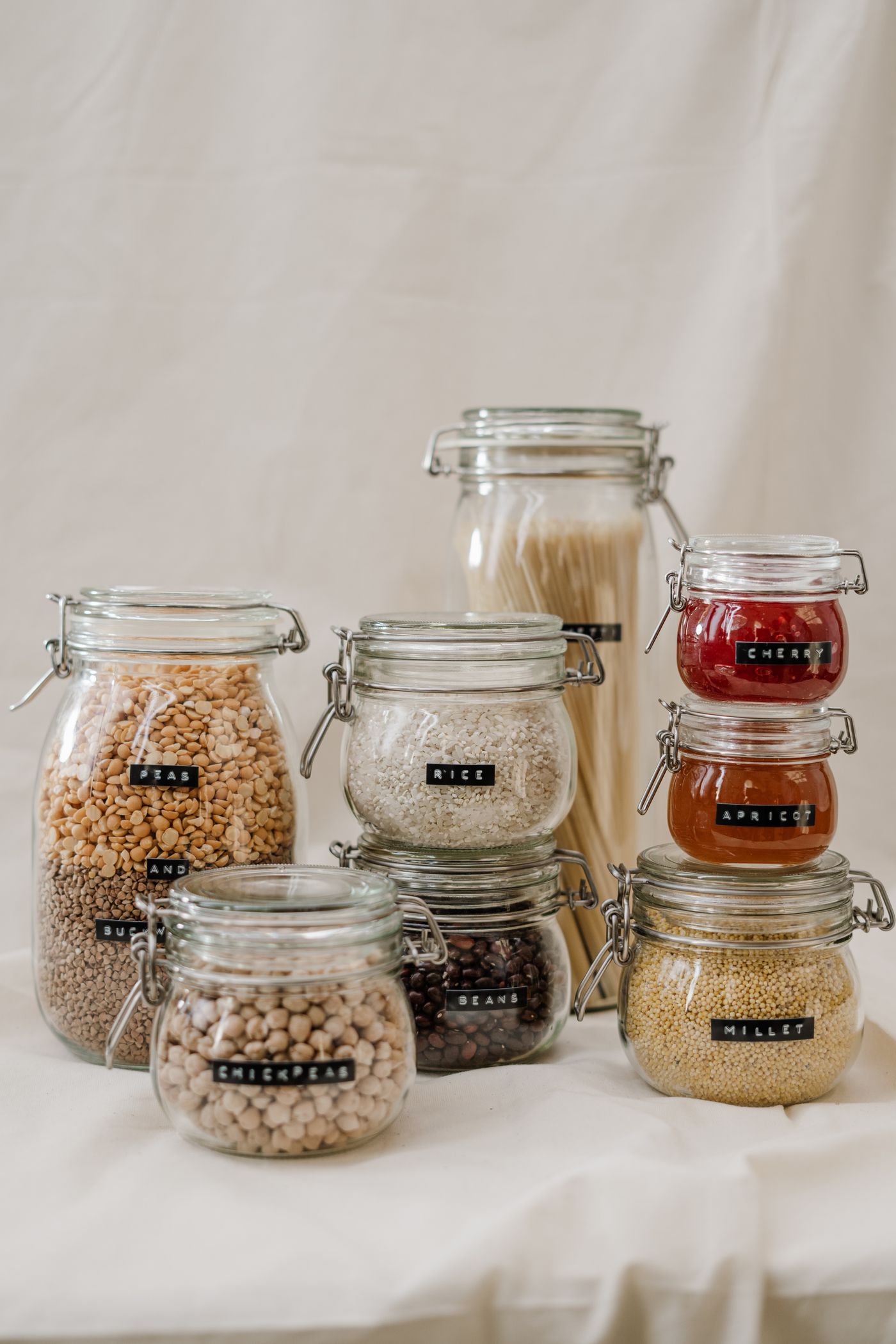
One survives the oven. The other survives the floor. Everything else in this article is footnotes to that sentence.
The physics, in buyer language
Borosilicate expands very little when heated. That's the whole trick — low thermal expansion means a dish can go from freezer toward oven without the internal stress that cracks ordinary glass. The costs: the raw glass runs meaningfully pricier, it's typically thinner-walled and lighter in hand, and against a tile floor it behaves like what it is — glass.
Tempered soda-lime is ordinary glass given a stress-hardening heat treatment. It shrugs off drops and knocks far better, and when it does fail it crumbles into blunt pebbles instead of daggers — a genuine safety virtue. Its weakness is the other one's strength: sharp temperature swings can defeat it, and in rare, well-documented cases tempered glassware fails energetically without an obvious trigger — the "exploding dish" of consumer-forum legend, vanishingly rare but real enough that your claims language should stay disciplined.
So: a customer who bakes wants borosilicate. A customer with kids and a stone floor is often better served by tempered. A packaging blurb promising both "oven-safe" and "shatterproof" on the same cheap unit is promising physics a discount.
How to tell what you're actually holding
The label is a claim; here's the verification ladder. Price floor first, as always in this market: borosilicate raw material costs what it costs, and a "borosilicate" set quoted at soda-lime money has already confessed. Weight and feel second — borosilicate pieces run notably lighter for the same size and often carry a subtler color; soda-lime shows a faint green-blue edge tint. Indicative, not conclusive. The spec sheet third: real borosilicate suppliers will state a coefficient of thermal expansion (the ~3.3 class) and stand behind a thermal-shock rating expressed as a temperature differential. A supplier who's never heard of their own COE is reselling mystery glass. The lab last and best: thermal-shock testing to a stated ΔT belongs with your third-party inspection or testing partner — it's a controlled-conditions test, not a kitchen stunt, and a modest per-SKU cost that converts a marketing word into a defensible claim.
And because a glass container is still a container: the lid is its own product. The PP frame, the silicone gasket, the flip tabs — every plastics and silicone check rides along, and the classic paperwork trick of testing the glass while ignoring the lid assembly rides along too.
The glass-specific inspection block
Glass earns three checks that no other material in your container needs, and all three fit inside a normal AQL visit. Edge and rim integrity first: chips and "flea bites" at rims and corners are the category's dominant cosmetic defect and its dominant safety complaint in one — run a gloved finger and good raking light around every sampled rim; a defect you can feel is a defect a customer will photograph. Annealing and tempering quality second: internal stress is invisible to the eye and fatal to the product, and the tool that reveals it is a polariscope — cheap, portable, and standard at any serious glassworks. Viewed through it, badly annealed glass lights up with stress rainbows; asking to see your samples through the factory's polariscope is a completely routine request whose reception, as usual, is data. For tempered pieces, spec compliance means the tempering actually happened — which the stress pattern shows — not just that the word appears on the carton.
Dimensional fit third, and it's really a lid check wearing a glass costume: glass bodies vary more run-to-run than injection-molded plastic, and a body a half-millimeter proud at the rim turns a perfect lid into a "leaky container" review. Sample lids get married to sample bodies across cartons, not to their factory-paired twins — cross-matching is thirty seconds per sample and catches the tolerance drift that pairing hides.
One paperwork line to close the block: thermal claims live or die on the test file. If the packaging will say "oven safe to 400°F" or "thermal shock resistant," the inspection folder should hold the lab report with that exact number — the same one-claim-one-document discipline as everywhere else, applied to the material where an unearned claim doesn't just disappoint, it detonates.
The freight chapter, which is really a breakage chapter
Agree protective packing, the relevant transit test and a documented remedy for damage; a breakage allowance must fit the product and contract, not an assumed industry percentage.
Sourcing geography, briefly: glass bodies come out of dedicated glassworks clusters and are frequently married to lids from the plastics belt by the trading layer you're quoting — one more reason to know which entity you're actually buying from when a "glass factory" quotes you a finished lidded set.
FAQ
Can I run both glasses in one range?
Yes, and smart ranges do: borosilicate for the oven-to-table line, tempered for the everyday stack. Just keep the claims separated with a wall — mixed messaging is how the wrong dish meets the wrong oven.
Is recycled glass a thing here the way recycled resin is?
Cullet in the furnace is normal glassmaking, not a scandal. The integrity questions in glass are grade honesty and tempering quality, not recycled content — unlike the resin aisle.
What breaks the claim in court, so to speak?
Printing "oven safe to 300°C" without a test file behind it. Pick the number your lab signed, not the number marketing wanted.
Adding glass to a storage range? Send me the target retail price and I'll tell you which glass that money honestly buys — WhatsApp +86 189 6983 1554. Pre-payment checks: the free 27-point Kitchenware Import Checklist.
Tell us what you want to source.
Send a product link, a reference photo or a supplier quote. We recommend the next step.
Or WhatsApp +86 189 6983 1554