
Sourcing Cutting Boards from China: PP vs Bamboo vs Rubberwood
Cutting boards look like the simplest SKU in the kitchen aisle. Three materials, a rectangle, done. Which is exactly why they're a good place to watch how sourcing actually works — because everything that matters about this product is invisible in a photo: the resin grade, the glue between the bamboo strips, the moisture content that decides whether your container arrives with boards or with banana-shaped complaints.
I bought boards by the container for retail programs. Here's the buyer's map of the category.
Materials, priced honestly
Price follows material, thickness and finish, so quotes are only comparable when those three match.
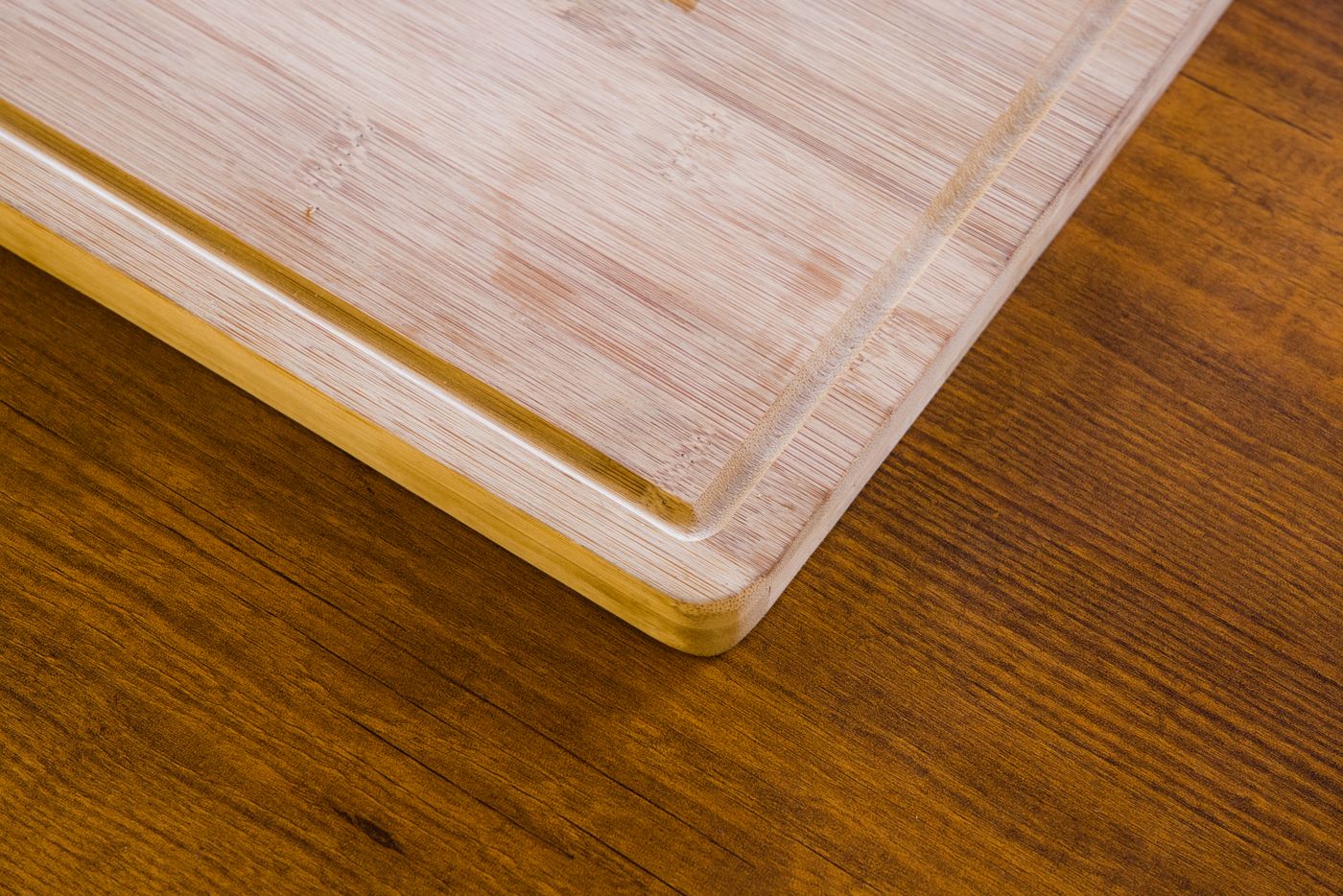
Bamboo sells the sustainability story and carries the category's best margins — and its least-discussed compliance question. A bamboo board is not a slice of bamboo; it's dozens of strips laminated under pressure, and the thing between the strips is adhesive. Cheap urea-formaldehyde glue migrates, and formaldehyde in a food-contact laminate is precisely what EU labs test for. Ask every bamboo supplier two questions: which adhesive system, and where's the food-contact migration report for the glued product, not for bamboo as a plant. A supplier who answers with a certificate for "natural bamboo material" has answered a different question than the one you asked.
For wood boards, specify the species, the construction (edge or end grain), the adhesive, the finish and the maximum moisture content.
The transit chapter: moisture, mold, and the container that rains
Wood and bamboo boards have a failure mode PP never dreams of: they keep breathing after they're packed. A sea container crossing climate zones sweats — "container rain" is the industry's cheerful term for condensation dripping off the ceiling onto your cartons — and organic boards drink it. The result lands in three flavors: warp, split, and the one that triggers marketplace suspensions, mold.
Agree a maximum moisture content with the supplier (many buyers use 8–12% for wooden kitchen boards), measure it at inspection, and pack with desiccant for sea freight.
If a board is oiled, name the oil and ask for food-contact evidence for it; "food-grade oil" printed on a label is not a test report.
None of this appears on a quote sheet, which is precisely the point: two bamboo boards at the same FOB, one packed with this paragraph and one without, are different products that happen to share a photo.
The hygiene debate, handled like an adult
Every material has a hygiene story. Plastic (PP) boards can go in the dishwasher, but knife scars hold bacteria, so they need replacing as they wear. Wood and bamboo can't go in the dishwasher; they need hand washing, drying and occasional oiling. Sell each board with care instructions that match its material, and avoid claims such as "antibacterial" unless you have test evidence for that exact product.
The spec sheet that separates pros from tourists
A cutting-board PO that says "PP board, 3 sizes" is an invitation. The one that gets what it ordered specifies: material and grade (virgin PP, or laminate adhesive class for wood); thickness in millimeters — the single biggest cost lever, and the single easiest quiet shave; flatness tolerance; edge finish; juice groove yes/no; surface texture (smooth PP boards skate on counters — the anti-slip corner detail costs cents and kills a one-star review); moisture content for wood; and packaging spec with carton math attached, because boards are dense and freight-hungry.
At inspection, boards are gloriously checkable: weigh them (thickness cheats show up on a scale), flex them, stack them flat overnight and look for rockers, and for wood — the pin meter. The AQL framework does the rest.
Where they're made, and what that means
PP boards pour out of the plastics belt around Taizhou; bamboo concentrates in Fujian and Zhejiang's bamboo counties; rubberwood boards often start as Southeast Asian timber finished in Chinese workshops — worth knowing, because origin questions are getting sharper everywhere. For mixed kitchenware containers, the Yiwu market shows you all three materials in one afternoon; for a board-heavy program, the cluster factories quote a tier lower.
FAQ
Why can similar bamboo boards cost differently? Strip construction, adhesive, moisture control, finish and packaging can differ.
Can one supplier do all three materials?
Usually as a trading layer over three workshops — fine if declared, priced as such, and QC'd per material.
What breaks first in this category?
Nothing "breaks" — it warps, smells, or scars. Which is why the complaints arrive in month three, not at inspection. Spec the invisible things, and month three stays quiet.
Send us your spec and quantity, and we'll come back with comparable quotes from verified suppliers.
Tell us what you want to source.
Send a product link, a reference photo or a supplier quote. We recommend the next step.
Or WhatsApp +86 189 6983 1554