
The Trade Fair System: How Buyers Work Any China Fair
Every trade fair produces the same two buyers. One walks out after three days with sore feet, four kilos of catalogs, and a phone full of photos they'll never identify. The other walks out with forty qualified suppliers in a structured file, twelve meetings already booked for follow-up, and three quotes in progress. Same fair, same feet. The difference is a system — and the system is fair-agnostic: it works at the Canton Fair, at Ambiente, at the Yiwu Fair, at any hall where a thousand booths compete for your attention.
Phase 1: Before — the fair is won at your desk
Define the shopping list, not the wish list. Three to five specific product missions ("upgrade our cutting board supplier," "find the spin mop gearbox factory," "price borosilicate for the premium line"), each with target price, quantity reality, and non-negotiables. Walking a fair "to see what's there" is how the four kilos of catalogs happen.
Pre-book the anchors. Exhibitor lists publish weeks ahead. Identify the ten must-see companies per mission, message them before the fair — "we'll visit your booth Tuesday morning regarding X" — and watch what changes: the right person is present, samples are prepared, and you've been triaged upward before arriving. Cold booth visits get sales staff; booked visits get decision-makers.
Build the capture kit. The QC toolkit travels — scale, calipers, test drops — plus the capture template on your phone. The eight fields, same as the market routine: company & booth number / contact & WeChat / factory-or-trader / key SKUs photographed with prices / MOQ / lead time / certifications claimed / one-line verdict. Decide the fields now; at booth thirty your judgment will be too tired to improvise them.
Phase 2: During — the daily rhythm
Morning: missions. Afternoon: discovery. Evening: processing. The mornings hit your pre-booked anchors while everyone's fresh. Afternoons walk the adjacent aisles where the unplanned finds live — with discipline: every stop still gets the eight fields or it didn't happen. And the evenings are the phase everyone skips and champions never do: one hour, same day, processing the capture — photos labeled, verdicts written, tomorrow's follow-ups flagged. A fair contact processed same-day is a lead; processed next week, it's a mystery photo of a spatula.
Three booth behaviors that separate buyers from browsers. Measure in public — weighing the sample at the booth changes the conversation's honesty instantly, same as at the market. Ask the sorting questions early: which items are your own production versus traded? Where's the factory? What's your main export market? Thirty seconds, and you know which of your missions this booth can actually serve. Collect selectively — the catalog you take is a commitment to carry it; photograph pages instead, into the capture file where they're searchable.
A real booth conversation, with photos and notes, takes 15–20 minutes, so ten pre-booked anchors fill most of a day.
Phase 3: After — the 72-hour window where fairs are actually converted
Here's the statistic nobody frames: most fair contacts get a generic follow-up weeks late, if at all — because every buyer flies home to a full inbox and the fair file rots. Which makes the follow-up window a competition with almost no competitors.
The system: within 72 hours, every A-grade contact gets a specific message — referencing the actual conversation, the actual product, with the seven-line brief attached for the top candidates. B-grades get a shorter version within the week. C-grades get archived, not deleted — next season's backup-supplier searches start in old fair files. Then the normal machinery takes over: samples, verification, the spec conversation — the fair's job was compression, not completion. A fair that produces three suppliers who eventually ship is a triumph; the forty contacts were the funnel, not the outcome.
One structural note for this site's readers: fairs and the Yiwu market are complements, not rivals — the fair shows you factories that never sit in market buildings; the market shows you stock, speed, and prices you can verify by hand any week of the year. The strongest single trip in this industry remains a fair phase paired with a market leg — the logistics of which live here.
The work split (and the solo variant)
Fairs scale beautifully with a second person — if the roles are split by function, not by hall. The working division:
The anchor runs the pre-booked meetings: sits down, negotiates, works the seven-line brief with decision-makers, collects the serious quotes. The runner walks the discovery aisles in parallel: eight-field captures, bench tests at booths, flagging finds worth the anchor's afternoon slot. Midday sync over lunch reshuffles the afternoon — the runner's morning finds become the anchor's 3pm meetings while the trail is warm. This split roughly doubles coverage but more importantly separates the two mental modes — negotiation and scanning — that exhaust each other when one brain alternates them all day.
Solo? Borrow the structure anyway. Alternate the modes by half-day instead of by person: mornings in anchor mode (meetings only, phone on silent), afternoons in runner mode (capture only, no negotiations past five minutes — book the good ones as tomorrow's anchor slots). The discipline against solo drift: a hard cap of three "just browsing" aisles per afternoon, because unstructured wandering is the mode that produces the four kilos of catalogs.
And the third configuration, increasingly common: you anchor remotely, someone local runs. Video calls from the booth for the two suppliers that matter, a local agent executing the capture protocol for the rest — the fair's compression benefits without the flight, at the cost of the handshakes. For a first-time program it's a compromise; for reorder-season reconnaissance it's often simply correct. Whichever configuration: the evening processing hour stays sacred, one person owns the file, and the 72-hour follow-up window doesn't care how many of you walked the halls.
FAQ
Which China fairs matter for housewares buyers?
For housewares, Phase 2 of the Canton Fair (consumer goods, gifts and home decoration) is the one to attend. But the honest answer is that the system above matters more than the fair chosen — a systematic buyer at a mid-tier fair beats a wanderer at the biggest one.
Do I need an interpreter at a fair?
Less than at the market — export-facing booths staff English speakers. Where language capability pays is the follow-up phase, when conversations move to factories and specifics.
Can someone run this system for me?
Yes — fair-walking against a client's brief, capture file and all, is a standard agent service, mine included. The brief still has to be yours; seven lines, and I'll walk the concrete.
A fair on your calendar this season? Send me your missions list — WhatsApp +86 189 6983 1554 — and I'll tell you which halls, which pre-bookings, and whether pairing it with a market leg makes sense for your categories. Plan the trip
Tell us what you want to source.
Send a product link, a reference photo or a supplier quote. We recommend the next step.
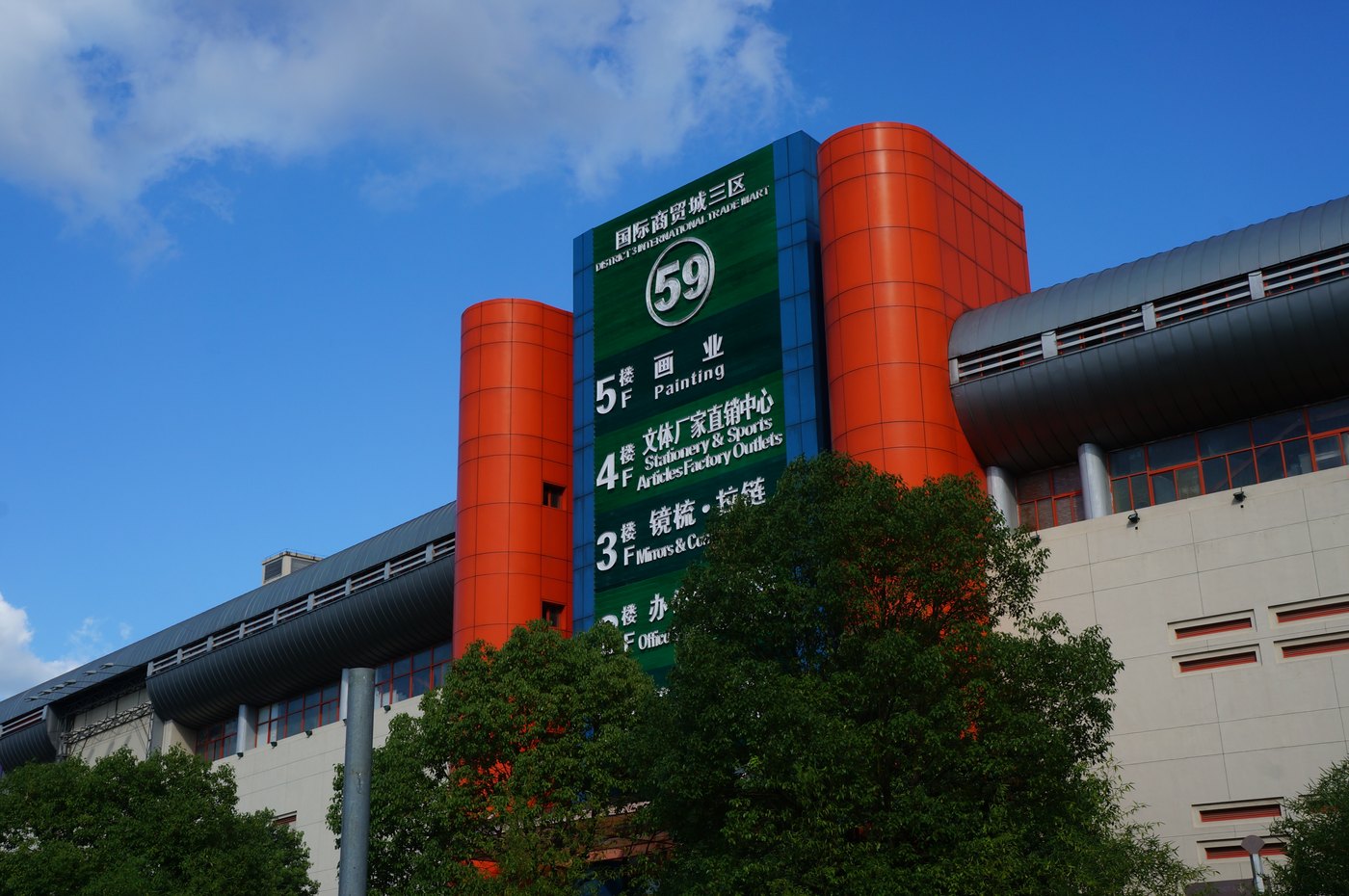
Or WhatsApp +86 189 6983 1554Photo: Yiwu International Trade Mart — District 3, Gate 59 (2014) — iamdanw · CC BY 2.0 (cropped to fit).
