
Jieyang & Chaozhou: Guangdong’s Stainless Kitchenware Belt, Explained
There are two stainless Chinas in the household world. The one an hour from Yiwu makes your vacuum flasks. The other one sits a thousand kilometers south, in a belt of towns between Jieyang and Chaozhou in Guangdong — and it makes, at planetary scale, the stainless that touches food: flatware, mixing bowls, cookware, colanders, kitchen tools, hotel and restaurant ware.
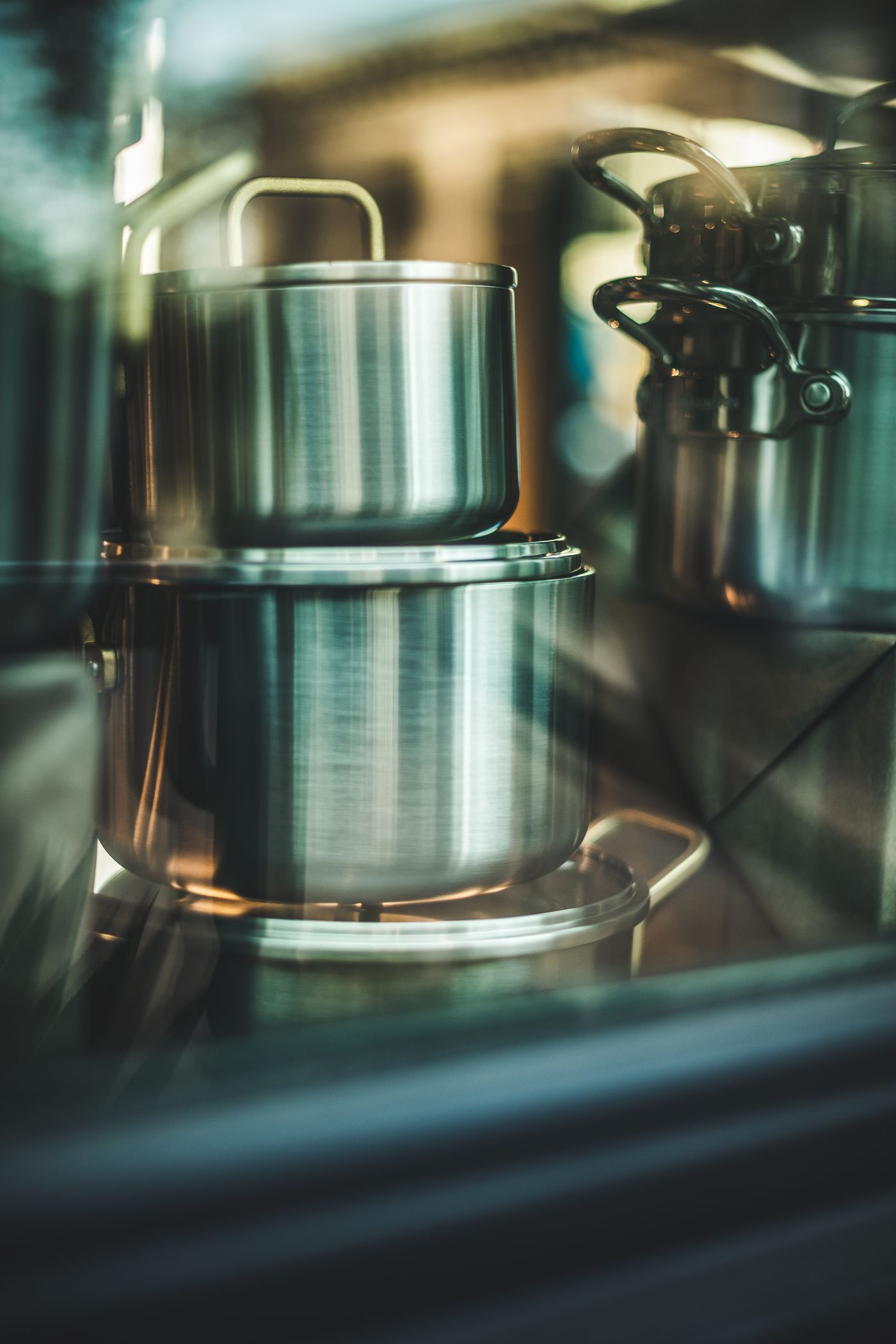
If your range includes a stainless spoon, decent odds its life story started here — as coil, in a town like Caitang, where the entire street-by-street economy is stamping, drawing, polishing, and packing steel. For a buyer, this cluster is both the best price floor in the category and the place where the category's oldest games were invented. Both facts matter. Here's the belt, honestly.
What chain depth looks like
The belt's power is vertical: coil suppliers, stamping and deep-drawing shops, polishing houses (whole workshops that do nothing but mirror or satin finishes), electroplating for gold-tone flatware, packing operations — the full journey from steel roll to gift-boxed 24-piece set happens inside a few townships. Consequences for your quote sheet: the region's base prices on food-contact stainless run genuinely low, because every process step is competed locally; capacity is elastic — big orders find lines fast; and specialization is extreme, so the "factory" you're quoted by may own two steps of eight and subcontract the rest, which is not a scandal but is a thing to know when assigning responsibility for a defect.
The honest paragraph: this is also the grade-game capital
I'll say it plainly, because pretending otherwise would make the rest of this article worthless: the belt's hyper-competitive pricing is the same force that industrialized the 201-sold-as-304 substitution and its subtler cousins — the low-nickel "201" that isn't even spec 201, the 430 flatware body honestly labeled 18/0 in one factory and dishonestly labeled 18/8 next door. None of this means avoid the belt. It means the belt is where your verification discipline earns its keep: XRF at inspection is non-negotiable here, the price-floor read is your first filter, and grade language goes into the PO with a test method and a remedy attached. Buyers who bring the discipline get the belt's real gift — excellent steel goods at excellent prices. Buyers who bring only trust subsidize everyone else.
Record weight, gauge and dimensions on the approved sample and verify them against the written limits; visual similarity cannot establish identical material consumption.
The finish spec: where the belt's real craft (and real cost) lives
In this belt, polishing is not a step — it's an industry. Whole workshops do nothing else, and the finish line on your spec sheet moves cost more than most buyers realize. The working vocabulary: mirror polish (the showroom finish — labor-heavy, fingerprint-hungry, premium gift-set territory), satin/brushed (the mainstream — forgiving in use, cheaper to execute honestly), and matte/bead-blasted looks that photograph beautifully and hide tool marks, which is both their virtue and their occasional job. A mixing bowl quoted "mirror inside, satin outside" versus "satin throughout" can move meaningful percentage points of cost, so the finish belongs on the spec sheet in words and on the golden sample in steel — "shiny" is not a specification.
Three finish-adjacent checks that earn their thirty seconds at inspection: burrs and edges — stamped-and-polished goods live or die at rims, handle edges, and spot-weld points; the gloved-finger drag around every sampled rim is this belt's single highest-yield test. Polish uniformity across cartons — polishing is piecework by human hands, so run-to-run consistency is precisely where tired Fridays show; sample wide, not deep. Weld quality on handles and fittings — a spot weld that shows discoloration or gaps now is the handle that arrives in a customer's hand, detached, later.
And one process note that closes the loop with the grade games: an aggressive polish can make cheap steel look like expensive steel better than any laser mark — mirror finish is the grade fraud's favorite cosmetic. Which is why in this belt, of all places, the shine and the XRF reading are two separate line items, and only one of them is negotiable.
Getting there, and whether you should
Practicalities: this is Guangdong, not Zhejiang — a separate trip from the Yiwu orbit, most naturally paired with a Canton Fair visit, with high-speed rail putting Chaozhou within reach of Guangzhou/Shenzhen. The belt has market buildings and showrooms, but like Yongkang, its true interface is the factory floor.
The program-fit test, same shape as always: stainless-heavy volume belongs here; stainless-flavored variety doesn't. If flatware, bowls, or cookware anchor your range at real quantities, belt-direct pricing plus your own QC beats any intermediate tier. If you buy two cartons each of forty designs, the belt's MOQ culture and your travel costs eat the theoretical savings — stay at the market tier and let consolidation do its job. And for EU-bound food-contact programs, remember the paper follows the product: migration testing and grade documentation get arranged with the same rigor here as anywhere — more, honestly, given the neighborhood's reputation, because your customers' compliance teams know the same geography you do.
FAQ
Is the belt cheaper than Yongkang for the same item?
Wrong comparison — they barely overlap. Drinkware and vacuum products live north; food-contact flatware, bowls, and cookware live here. The rare overlap items price similarly once grade is truly equal.
Can Yiwu booths source from this belt anyway?
Constantly — a meaningful share of the stainless on District 2 shelves began here. You're often buying belt steel plus two margins; the question is only whether the margins are buying you consolidation and convenience you actually need.
Biggest single mistake buyers make here?
Celebrating the price and skipping the XRF. The belt punishes exactly one thing: verification budgets cut to fund the discount.
Flatware or cookware program at real volume? Send me the SKUs and quantities — WhatsApp +86 189 6983 1554 — and I'll tell you whether the belt math works for you, and what the verification layer must look like if it does. How we work
Tell us what you want to source.
Send a product link, a reference photo or a supplier quote. We recommend the next step.
Or WhatsApp +86 189 6983 1554