
Carton Engineering: Compare Packing and Freight Costs
Buyers spend weeks grinding a supplier for two cents on a mixing bowl, then ship those bowls assembled, boxed upright, half air — donating back ten times the negotiation win to the shipping line. I watched it as a retail buyer; I watch it now. Freight is priced by cube and weight, not by product value — which means the carton is a cost line you control completely, and almost nobody manages it.
The discipline is called carton engineering, it happens before the PO is signed, and it's the highest-return hour in importing.
The physics of the invoice
Two levers, in order of power:
Nesting is the strongest lever: bowls, buckets and containers that stack inside each other ship far less air, as long as the inner pieces are protected.
Right-sizing the protection. Under-packing costs you breakage; over-packing costs you cube and cardboard. The spec should name the carton grade (5-ply for dense goods, with the burst strength stated on the carton spec), the void-fill approach, and — for glass and ceramics — the partition design, then verify all of it at inspection with a drop test. "Strong packaging" is not a spec. "5-ply, K=K flute, ≤18kg gross, ISTA-style drop from 80cm, zero damage" is.
Where the factory's incentives quietly differ from yours
Ask for packing options with measured dimensions and compare protection against occupied volume; do not infer a supplier’s incentives or a waste percentage from a quotation alone.
The fix isn't adversarial; it's a request most good factories handle happily when asked at quote stage: "quote me the nested pack-out and the assembled pack-out, cartons-per-40HQ for both." Some will even propose better — the packing engineer at a serious Taizhou plastics factory has solved your exact geometry a hundred times. But the request has to come from you, because the default answer is always the easy one.
Two honest counterweights, so this doesn't read like nesting solves everything. Retail-ready constraints are real: if your channel demands display-assembled units in printed boxes, your nesting room shrinks — the engineering then moves to the master-carton and pallet layer instead. And assembly at destination costs something: thirty seconds per unit is free for a consumer, expensive for a 3PL doing it 50,000 times — run that number before celebrating the cube savings.
The one-page pack-out spec
Steal this structure and attach it to every PO alongside the defect sheet: product orientation and nesting scheme (with a photo of the approved pack — the golden sample logic applied to the carton); inner pack quantity and material; master carton dimensions, grade, gross weight ceiling; cartons per 20'/40'HQ; carton markings (SKU, quantity, carton number of total, side-up marks, your PO reference); and the drop-test standard verified at pre-shipment. One page. It converts "packaging" from a hope into a deliverable — and on reorders, it's what stops the quiet downgrade to 3-ply from funding someone's discount.
The pallet layer: the engineering above the carton
Carton math has a second floor that catches importers at destination: how the cartons become pallets, and whether they should.
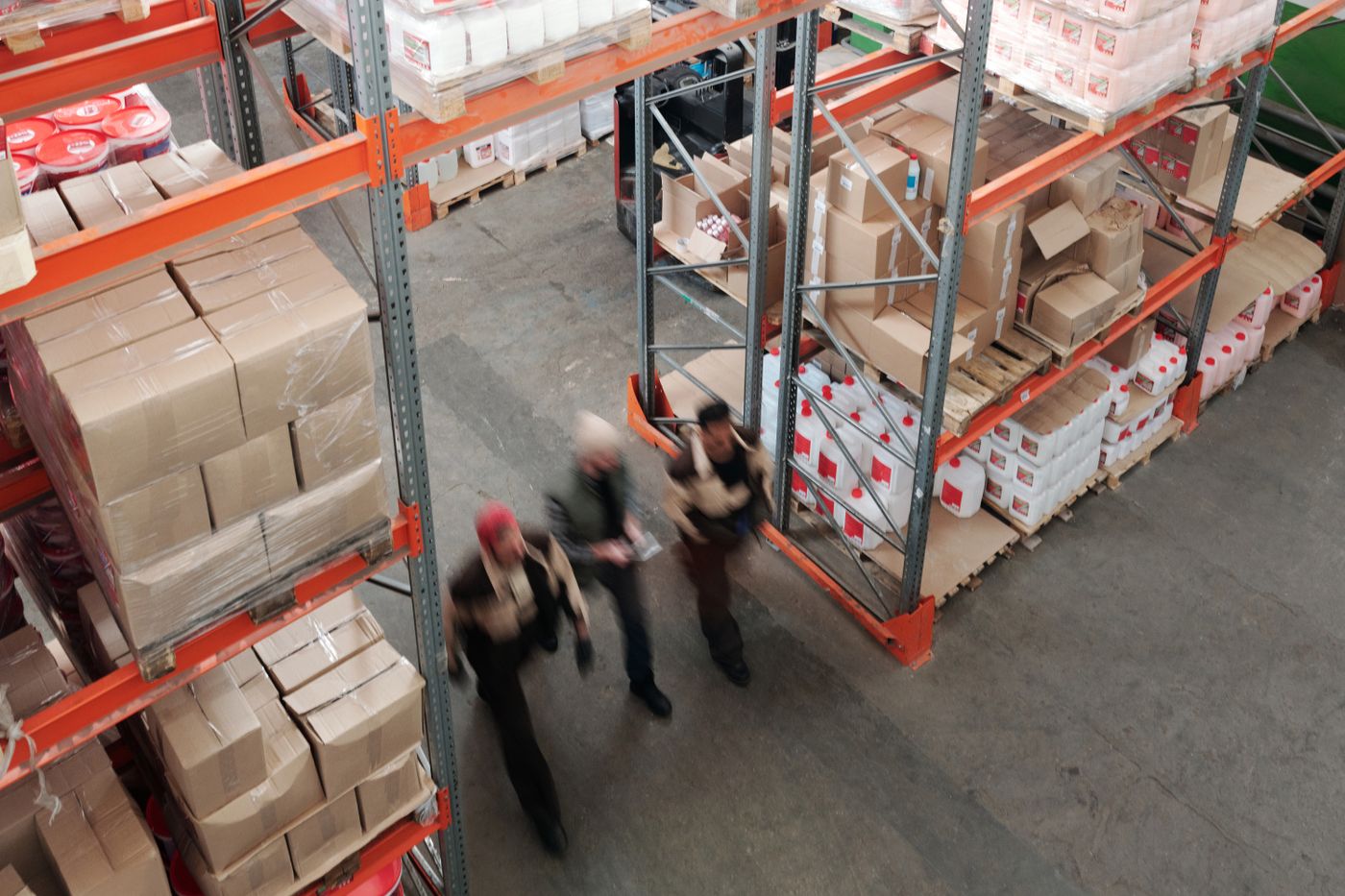
Whether to palletise is usually decided by your receiving warehouse: many 3PLs and Amazon require pallets or charge extra to unload floor-loaded containers.
So the engineering question extends: design the carton to tile the pallet, and the pallet to fill the container. A master carton whose footprint divides evenly into a standard pallet stacks without overhang (crush) or underhang (wasted deck); a pallet height that clears your destination's ceiling avoids re-stacking fees. This is ten minutes with a calculator at spec stage — and it's the layer where FBA-bound sellers quietly bleed money, because the factory optimized for the container while the warehouse charges by the pallet.
The practical default I run for housewares: floor-load the dense, uniform SKUs; palletize the fragile and the FBA-bound; and when a container mixes both, load pallets at the door end so destination handling starts easy. Whatever the choice, it goes in the pack-out spec with the carton plan — because "how it ships" decided at booking time is how you pay twice, once in China and once at the dock.
FAQ
The saving is the difference between two verified packing and freight calculations, less any extra material or handling cost.
Does this matter on FCL, where I pay per box?
More, arguably: better cube means more product per fixed-price box — or dropping from two containers to one, which is the biggest single line-item win in this entire article.
Want your current pack-out audited? Send me one carton spec and one product photo — WhatsApp +86 189 6983 1554 — and I'll tell you within a day whether there's cube on the table and how much. The full landed-cost math
Plan the next step for your order
Use the related guides to clarify your requirements, then choose the service that matches the work you need.
Or WhatsApp +86 189 6983 1554